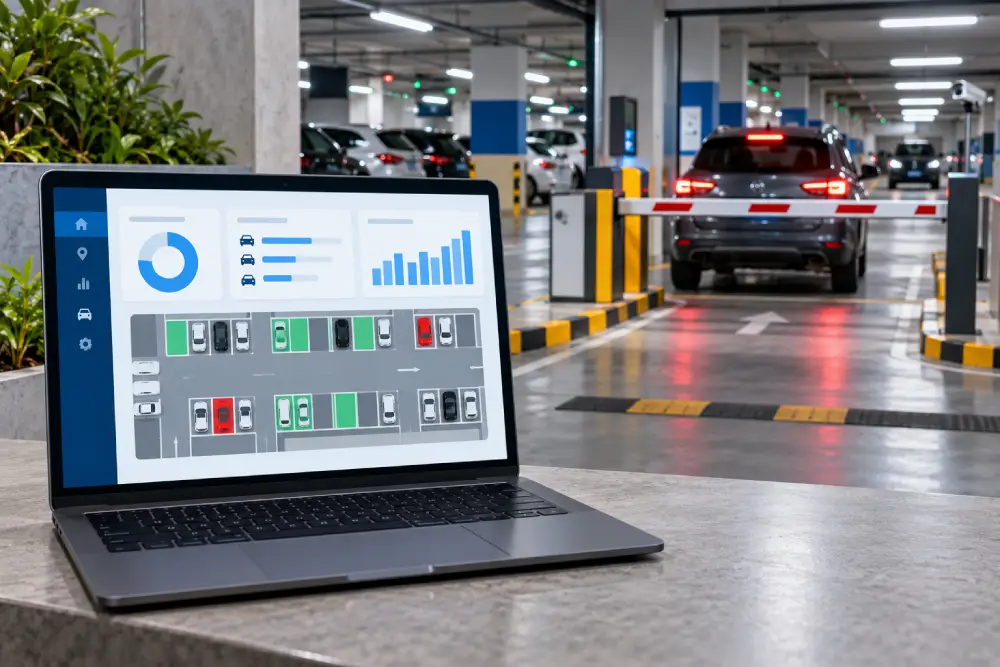
Parking operations involve spaces, permits, reservations, vehicles, users, payments, access equipment, enforcement, and service requests. When these activities are managed through paper permits and separate spreadsheets, administrators may struggle to understand availability or verify authorization. Custom application development can create one parking management platform for controlling access, selling permits, assigning spaces, processing payments, and measuring facility use.
Parking management software development can support commercial properties, universities, hospitals, residential communities, airports, municipalities, event venues, and corporate campuses. A custom platform can reflect the facility’s permit types, eligibility rules, pricing, enforcement procedures, and access technology.
What Is Parking Management Software?
Parking management software is a digital system used to organize parking facilities and the people or vehicles authorized to use them. It may include:
- Facility and zone records
- Space inventories
- Permit applications
- Vehicle registration
- Reservations
- Waiting lists
- Payment processing
- Access-control integration
- Visitor parking
- Violation records
- Maintenance requests
- Occupancy dashboards
The objective is to improve availability and accountability without making parking unnecessarily difficult for legitimate users.
Manage Facilities, Zones, and Spaces
Administrators can create structured records for garages, lots, floors, zones, entrances, and individual spaces. Each area can have its own capacity, schedule, eligibility rules, restrictions, and pricing.
Accessible spaces, charging spaces, visitor areas, reserved spaces, and loading zones can be identified separately. The system should never treat a space as generally available when a legal or operational restriction applies.
Digitize Parking Permit Applications
Users can apply through an online portal and provide approved information such as vehicle details, location, department, lease, membership, or accessibility documentation. Conditional forms can display requirements for the selected permit type.
Applications may require review before a permit becomes active. The system can record who approved the permit, its effective dates, assigned facility, payment status, and vehicle connections.
The U.S. Department of Transportation parking policy is one example of a formal program using allocation and eligibility procedures. Every organization must define its own policies and applicable legal requirements.
Support Reservations and Waiting Lists
Reservation tools can make short-term parking available to employees, visitors, contractors, patients, or event attendees. Users can view approved availability, select a time, and receive confirmation.
If capacity is unavailable, the platform can manage a waiting list and offer released spaces according to configured rules. Reservation limits can reduce the risk of one user holding more capacity than necessary.
Custom booking system development can support time-based reservations, capacity controls, cancellations, and reminders.
Process Payments and Renewals
Secure payment gateway integration can support permit purchases, reservations, replacement fees, and other approved charges. Payment records can remain connected to the relevant user, vehicle, permit, and facility.
Renewal workflows can confirm continued eligibility, request updated vehicle information, calculate current fees, and identify unresolved balances. Refunds and fee waivers should require appropriate authorization.
Connect With Access and Enforcement Systems
API development and integration can connect compatible gates, license plate systems, credential readers, payment providers, mobile enforcement tools, and building-management systems.
Enforcement staff can verify whether a vehicle has an active permit without viewing unnecessary personal information. Potential violations should remain subject to human review and an established appeal process.
Track Occupancy and Utilization
With data analytics and reporting, managers can review occupancy by facility, permit use, reservation cancellations, peak periods, waiting-list demand, payment status, and underused allocations.
Sensor estimates and confirmed transactions should be identified separately so users understand the source and reliability of occupancy data.
Protect Driver and Payment Information
Parking platforms may store names, vehicle identifiers, access records, locations, and payment references. Security controls can include encryption, multifactor authentication, role-based access, audit logs, retention rules, and protected integrations.
TechHubTech’s cybersecurity services can help organizations evaluate risks involving administrators, enforcement users, mobile devices, gates, and third-party services.
Frequently Asked Questions
Can the platform manage several parking facilities?
Yes. Facilities can have separate capacities, zones, rules, prices, schedules, and administrators.
Can users reserve parking in advance?
Yes. Reservations can be controlled by availability, user eligibility, time, permit type, and facility rules.
Can the software connect with parking gates?
Potentially. Integration depends on the equipment vendor, available interface, security requirements, and organizational approval.
Can users appeal a parking violation?
Yes. A structured appeal workflow can collect evidence, assign a reviewer, communicate a decision, and preserve the history.
Build a More Visible Parking Operation
Parking management software development connects permits, vehicles, spaces, reservations, payments, access, and reporting. TechHubTech develops secure parking platforms that help organizations use limited capacity more effectively while providing a clearer experience for drivers.