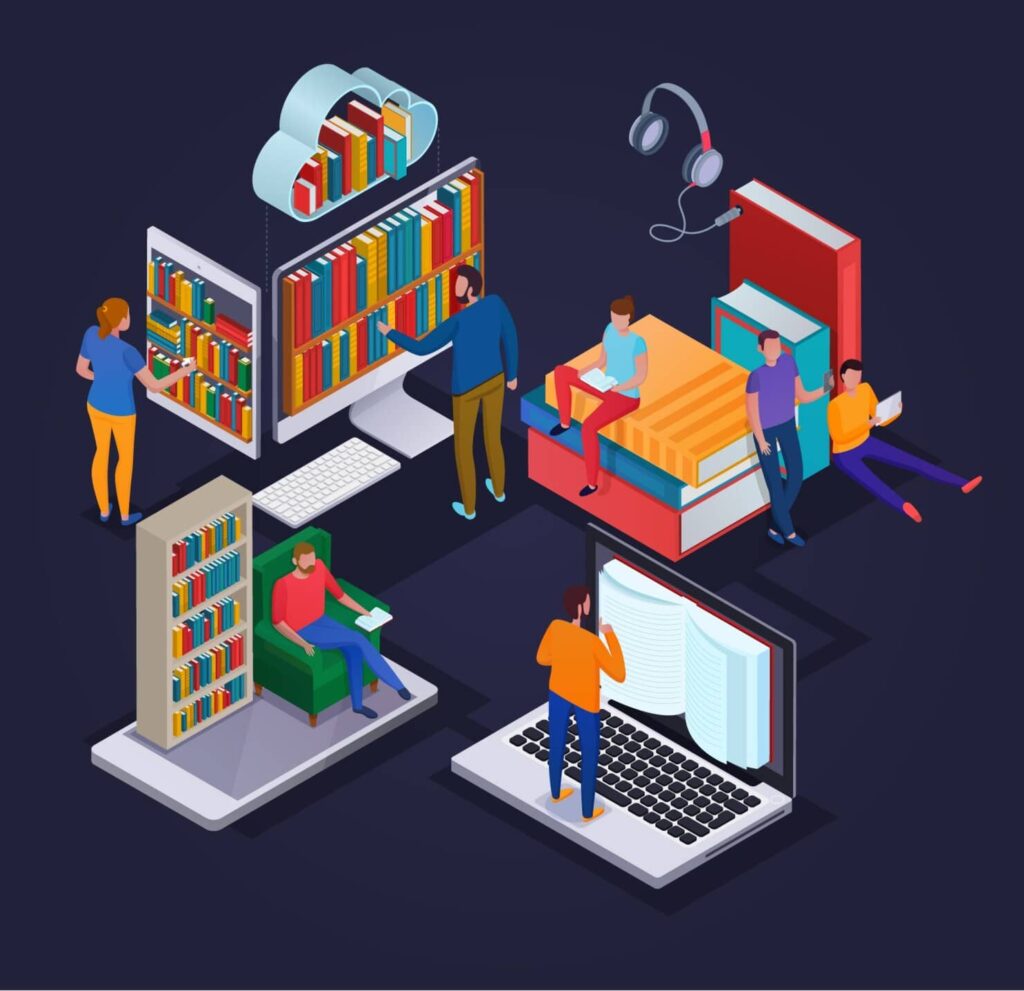
Libraries manage books, journals, media, digital resources, members, loans, reservations, acquisitions, and public services. Custom web application development can create a library management system that connects staff workflows with a fast, accessible discovery experience for patrons.
Library management system development can support public libraries, schools, universities, research centers, corporate libraries, and specialized collections.
What Is a Library Management System?
A custom library platform may include:
- Bibliographic cataloging
- Item and copy records
- Member accounts
- Checkouts and returns
- Holds and reservations
- Renewals
- Fines and fees
- Acquisitions
- Serials management
- Digital-resource links
- Interlibrary activity
- Public catalog search
The platform should separate descriptive records from physical or digital copies so staff can manage multiple items accurately.
Build Structured Catalog Records
Catalog records can include titles, creators, subjects, editions, identifiers, publication details, formats, languages, summaries, and authority-controlled names.
The Library of Congress MARC standards provide formats for representing and communicating bibliographic and related information in machine-readable form. A library may also use other standards depending on its cataloging environment and partners.
Qualified librarians should define cataloging policies, controlled vocabularies, and record-quality requirements.
Manage Copies, Locations, and Availability
Each physical copy can have a unique barcode, call number, branch, shelf location, condition, circulation status, and history. Digital resources can have access links, license restrictions, authentication requirements, and availability rules.
Inventory tools can identify missing, misplaced, withdrawn, damaged, or in-transit items.
Improve Circulation Workflows
Staff can check items out, process returns, renew loans, record declared losses, and manage exceptions from one interface. Loan periods and renewal limits can vary by member type and material category.
Self-service functions may allow patrons to view loans, renew eligible items, pay approved fees, and update communication preferences.
Support Holds and Reservations
Patrons can place holds on eligible materials and select a pickup location. The system can maintain queue order, notify the next patron, and release the item if it is not collected within the configured period.
Room, equipment, or study-space reservations can be supported through custom booking system development.
Manage Acquisitions and Suppliers
Staff can record requests, selections, purchase orders, invoices, receipts, funds, and cataloging status. Acquisitions can remain connected to the final catalog and item records.
Budget dashboards can compare commitments, expenditures, and remaining allocations without replacing the institution’s authoritative accounting system.
Connect Digital Resources
API development and integration can connect approved e-book platforms, discovery services, identity providers, payment systems, repository tools, and institutional applications.
Access controls must respect license terms and user eligibility. The system should not display a resource as available when authentication or license restrictions prevent access.
Protect Patron Privacy
Borrowing histories and research interests may be sensitive. Permissions, retention rules, encryption, and audit logs can help limit unnecessary exposure.
TechHubTech’s cybersecurity services can help libraries evaluate risks involving staff accounts, public terminals, patron portals, digital integrations, and exported reports.
Analyze Library Services
With data analytics and reporting, administrators can monitor circulation, holds, collection use, acquisitions, overdue items, digital access, branch activity, and service demand.
Reports should protect individual patron privacy and focus on legitimate operational needs.
Frequently Asked Questions
Can the system support several library branches?
Yes. Each branch can have separate collections, locations, operating rules, staff permissions, and reports.
Can patrons search the catalog online?
Yes. A public catalog can provide search, filters, availability, holds, account access, and approved digital links.
Can the software use barcode or RFID equipment?
Potentially. Compatibility depends on the hardware, data format, vendor interfaces, and library requirements.
Can records be imported from another catalog?
Yes. Structured migration can map bibliographic, item, member, loan, and authority data after quality review.
Create Better Access to Library Resources
Library management system development connects cataloging, circulation, acquisitions, patron services, and digital access. TechHubTech develops scalable library platforms that support professional workflows while making collections easier to discover and use.